
Water through the ceiling
Water can travel through the building before it becomes visible. The flat directly above is one possibility, rather than a diagnosis.
When another flat is involved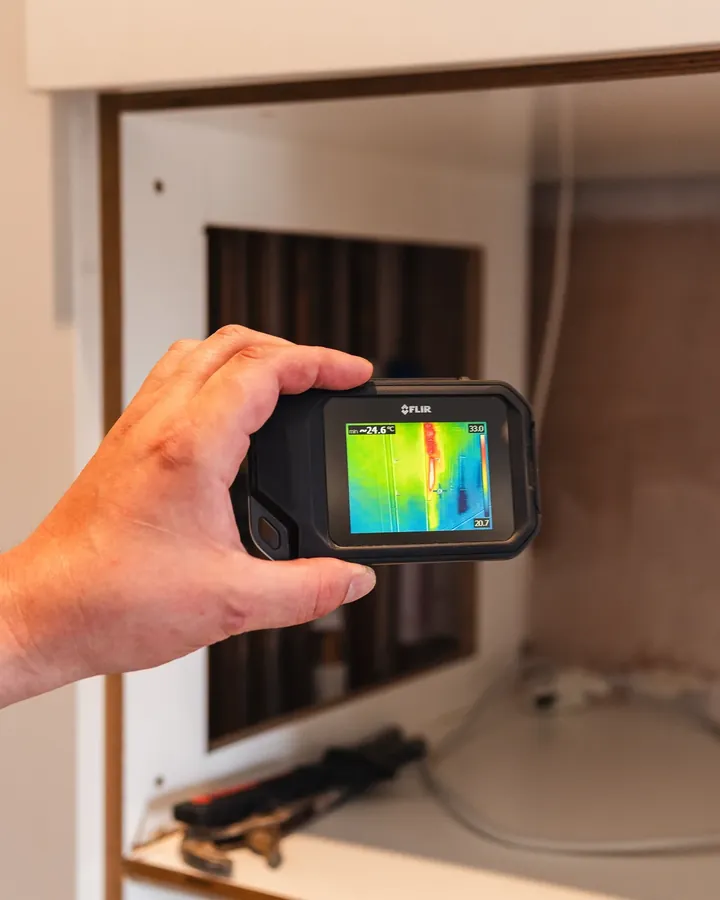
A leak in your flat?
Start with the source.
A stain, a drip or falling pressure is where flat leak detection starts. On its own, it does not tell you where the problem begins.
Water can travel through the building before it becomes visible. The flat directly above is one possibility, rather than a diagnosis.
When another flat is involvedShare what each household has noticed. Confirm access and who can authorise an investigation before making arrangements.
Coordinate accessHidden supply pipes, wastes and the surrounding structure need different investigations. Describe when the damp appears and which fittings are nearby.
How the methods helpA hidden pipe leak is one possible cause. Boiler or system faults can also cause pressure loss; ADI can discuss whether leak detection is suitable.
Discuss the right survey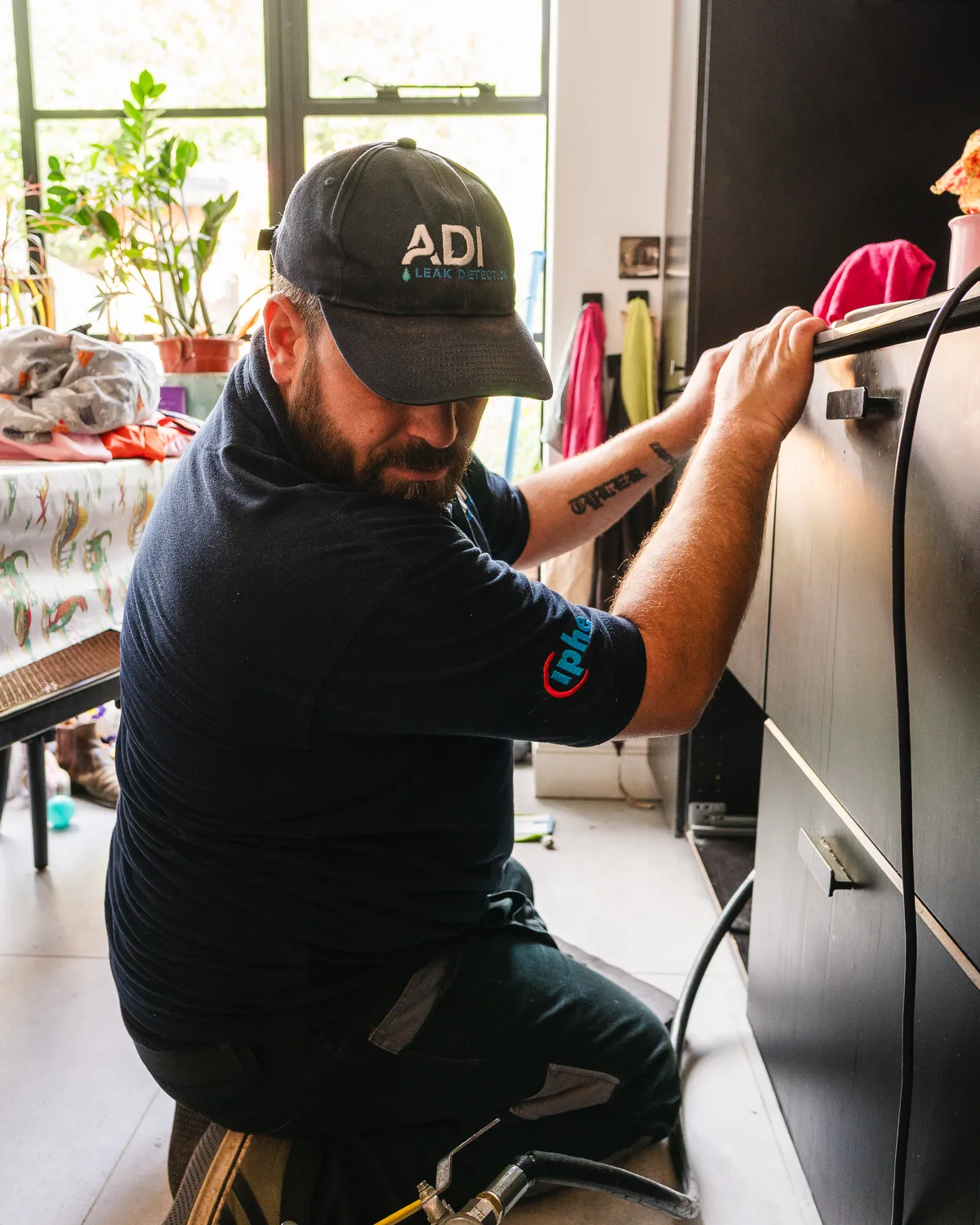
ADI chooses equipment to suit the suspected source and the spaces the engineer can reach.
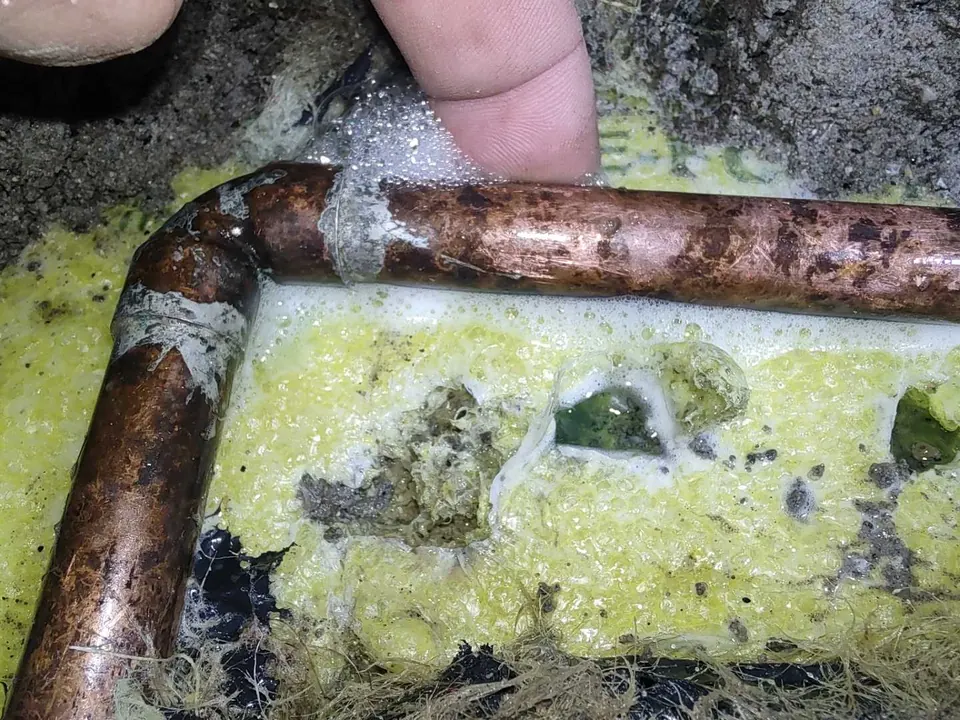
Block of flats
A building manager showed ADI a bedroom ceiling with water dripping through it. Pressure tests narrowed the search to the hot-water feed, and tracer gas led to a leaking copper pipe under a boiler.
Read the hot-water pipe case study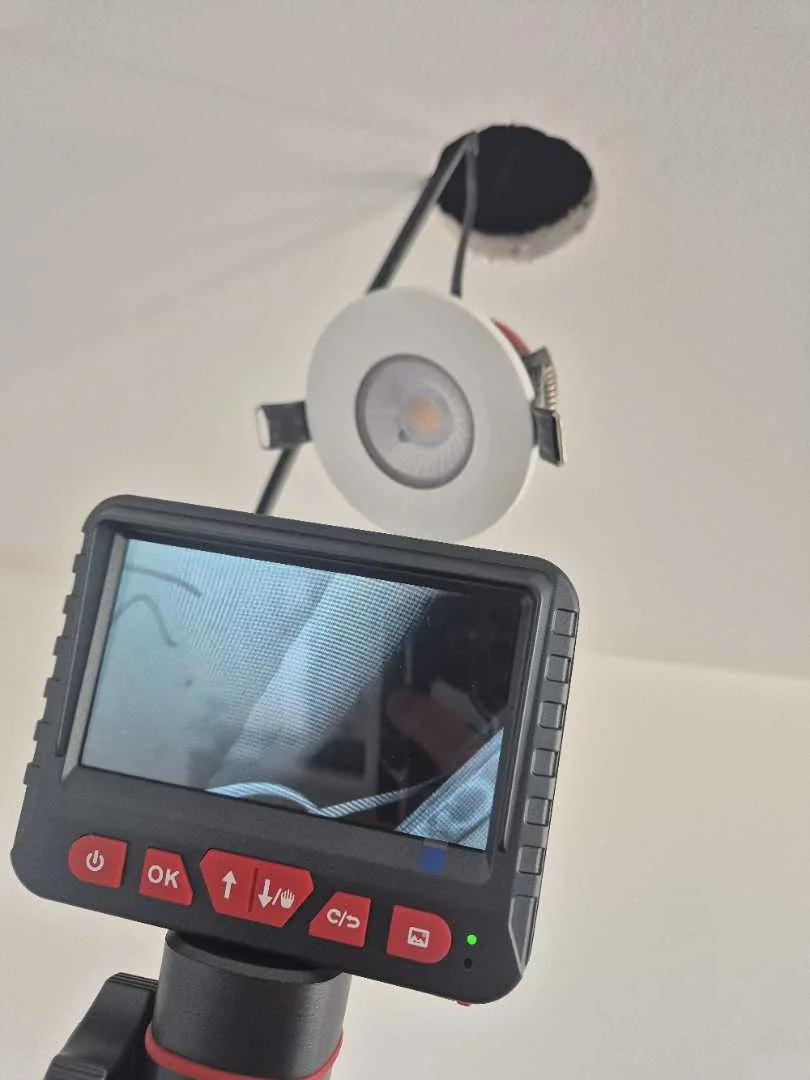
Block of apartments
The lower apartment had a damaged ceiling and wall while the boiler upstairs kept losing pressure. Tracer gas and an endoscope found old, disused heating pipework leaking behind the units.
Read the redundant heating pipe case study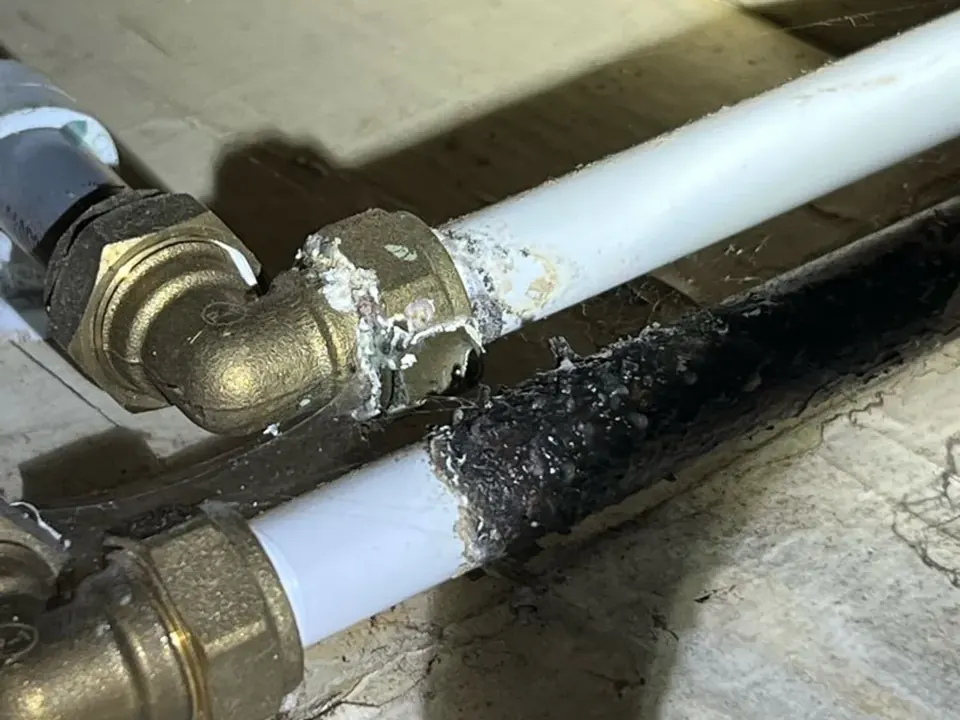
Flat in a block of eight, Dumbarton
With shared stopcocks and no way into the neighbouring homes, the search stayed inside one flat. The leak turned out to be on a stop valve hidden under the hallway floorboards.
Read the Dumbarton stop valve case studyWhen a leak crosses a boundary, the next step often needs a conversation as well as an investigation.
Keep a record of where and when water appears. Let the relevant occupier, landlord or managing agent know, and agree who will coordinate access. A survey’s findings can support the next conversation without deciding legal responsibility.
Read the guide to leaks between flats
Hamaad from ADI was great
Read the 19 August 2026 review on TrustpilotHamaad from ADI was great. He was very thorough with his work and communicated everything very clearly. He was able to locate the leak and provided a detailed report that could be shared with my insurer. He went above and beyond to answer questions about my insurance claim from both me and my insurer. I'd highly recommend their services.
Arrived within 24 hours, sorted in 4
Read the 29 July 2026 review on TrustpilotArrived within 24 hours of call. James was extremely professional and empathetic, finding the leak in the concrete floor within 2 hours. He was able to drill down and repair the pipe and then reset the heating system within the next 2 hours. It is expensive but the alternatives could prove to be a lot more costly.
This company came and found my leak in…
Read the 6 July 2026 review on TrustpilotThis company came and found my leak in the concrete hallway with limited excavation. A very polite and helpful man named Kris who clearly knows what he is doing. Very satisfied and would recommend
ADI publishes coverage across England, Scotland and Wales. Give the team your postcode to check suitability and current availability for your flat. Coverage does not mean a guaranteed attendance time.
Call to check your postcodeYour enquiry goes directly to ADI Leak Detection. Tell the team what you have noticed, your postcode and which flats may need access. They can discuss the right investigation, a quote and availability.
Monday–Friday, 7:30am–6:30pm
Saturday and Sunday closed
UK local time. Office hours are not engineer attendance times. Please check bank-holiday availability.
Correspondence office
Suite 407, Access Business Center, Handy Cross Roundabout, High Wycombe HP11 1UP
Answers to what flat owners, landlords and residents usually ask before calling ADI. For anything specific to your building, the team can talk it through on the phone.
Read the full survey guideADI chooses equipment to suit the suspected source and the spaces the engineer can reach. That can include moisture readings, thermal imaging, acoustic listening, tracer gas and inspection cameras. Not every method suits every leak, and part of a wall, floor or ceiling may still need opening to confirm the exact position. See how each method helps.
Keep clear of any wet electrics, and contact the emergency services if there is immediate danger. Tell the occupier above and whoever manages your home, and note when and where the water appears. The flat directly above is one possibility; water can travel through a building before it shows. Read the guide to leaks between flats.
Often, yes. The investigation may involve the affected flat, a neighbouring flat or shared parts of the building. Agree who will coordinate access before booking, and do not promise access on someone else’s behalf. How to arrange access.
It depends on the cause, the lease and the insurance in place. A survey helps explain where the leak is, but it does not decide legal responsibility on its own. Ask the building’s insurance contact or your insurer whether tracing the leak is covered before you book.
Leak detection aims to narrow down where the problem is before anything is opened. Some jobs still need a small area of floor, wall or ceiling opened to reach the pipe, and ADI’s case studies include lifted carpet and ceiling access. Opening up and making good are agreed separately.
Detection, opening up and repair are separate parts of the job. In each of ADI’s flat case studies a repair was carried out on the visit, but some repairs need another trade or a second appointment. Ask what is included when you book.
There is no fixed price on this website, because ADI needs to understand the property and the likely investigation first. Call with your postcode, the symptoms and the access details for a quote, and ask what the price includes.
Ask about the findings and report when you book, including who will receive them. ADI’s booking terms state that reports are released after full payment. A report can help explain the investigation to an insurer, but it does not guarantee a claim will be paid.