A drip in the flat downstairs.
The flat sits in a block of eight. The neighbour directly below had a constant drip coming through their hallway ceiling, pointing to a leak somewhere in or beneath the flat above.
The building made that harder to trace. Only two external stopcocks served all eight properties, nobody knew how the mains ran through the block, and the other flats had no stop valves ADI could reach. There was also no permission to enter the neighbouring homes, so testing the external mains was not possible and the investigation stayed inside the customer’s flat.
Narrowing it down inside one flat.
Two stopcocks in the flat each controlled a different zone, so sections of pipework could be isolated and checked separately. The internal mains passed its test.
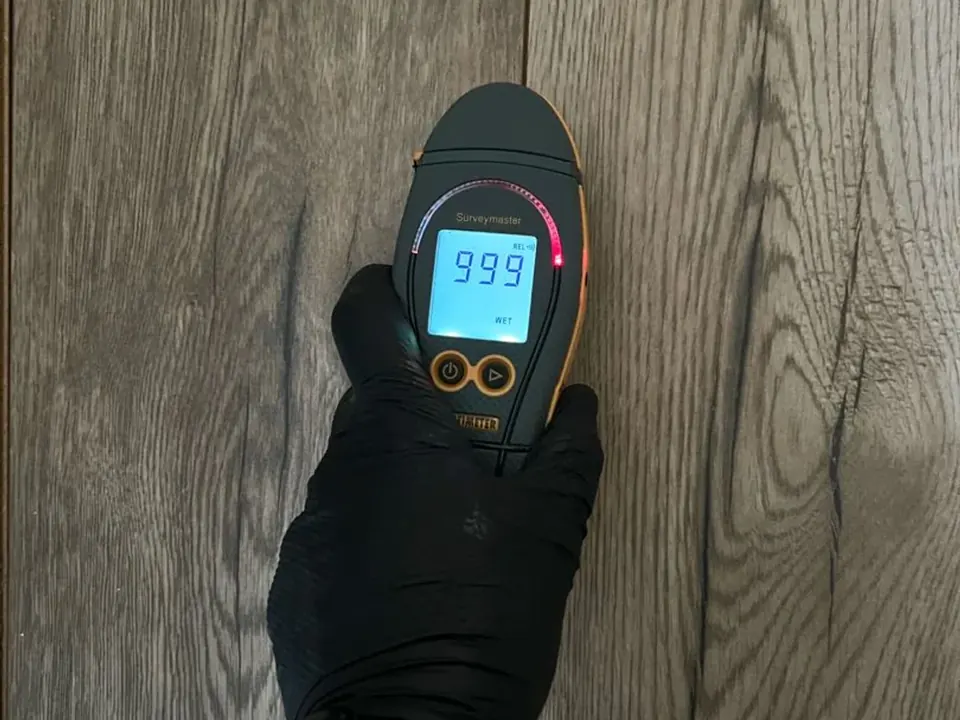
The engineer then used acoustic testing, thermal imaging and a moisture survey. The moisture meter gave a high reading in the hallway floor, right above where the drip was appearing downstairs.
Two smaller problems turned up along the way: a slight weep on the cold pipe under the boiler, and a puddle under the sink that suggested a washing machine, hose or sink waste fault. Neither looked big enough on its own to explain the water reaching the flat below.
Under the hallway floorboards.
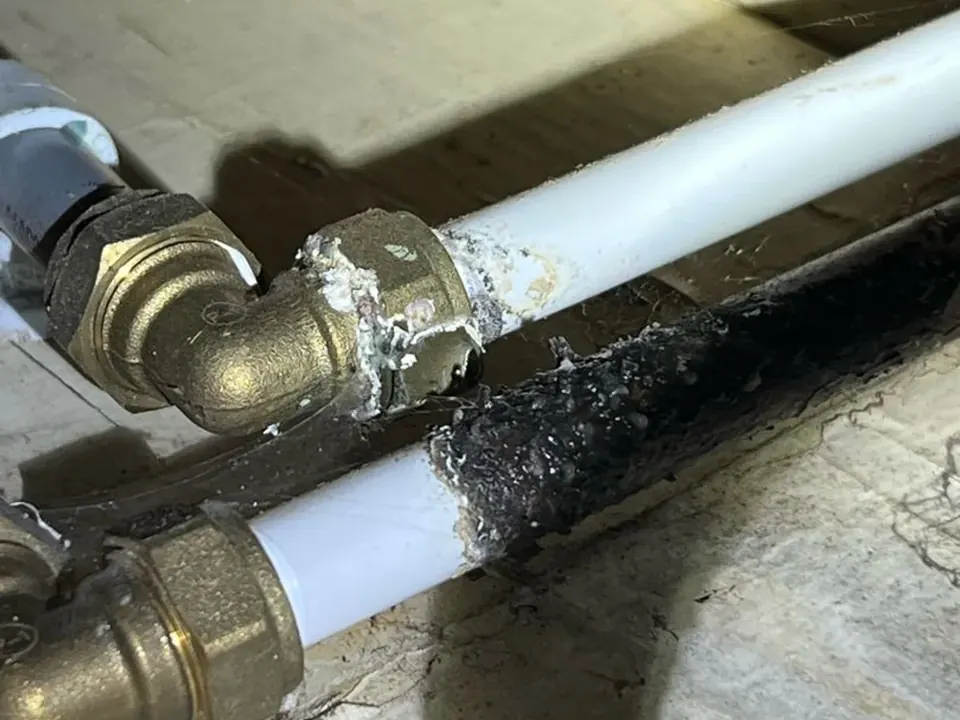
With the customer’s permission, the hallway floorboards were lifted. Underneath, the engineer found a leak on what appeared to be a stop valve on a dead-leg section of pipework, with a capped-off redundant waste pipe nearby that also raised concern.
The pipework was cut back and new fittings were put in. Access was too limited for a full pressure retest, so the repair was checked visually, and no further leaking was seen at the repaired area.
Further work was recommended.
The published account lists more work to reduce the chance of it happening again:
- Cut back and cap the dead leg and the redundant waste pipe as far as possible.
- Deal with the weep under the boiler and the washing machine fault promptly.
- Protect the pipework when the floor is relaid, ideally using a joiner, because it sits close to floor level.
- Fit a single main stop valve so the flat’s water supply can be fully isolated.
A visual check covers less than a pressure test, so the result applies to the area that could be seen. In a block with shared supplies, what can be tested depends on which homes and stopcocks the engineer can reach.
More case studies from flatsRead about access between flats